
Boulder County Criminal Court Records Search
Boulder County criminal court records are public. The 20th Judicial District serves this area. Cases date back to 1976 for District Court. County Court records start in 1983. You can search these records online or in person. Two court locations serve Boulder County residents. The main court is in Boulder. A second location sits in Longmont. Both handle criminal cases daily. Records include charges, hearings, and outcomes. Find dockets, filings, and judgments. Access is open to all.
Boulder County Quick Facts
Boulder County Criminal Court Locations
The 20th Judicial District has two courthouses in Boulder County. The main location sits in the city of Boulder. This court handles most felony criminal cases. It also hears appeals from County Court. The building sits at 6th Street and Canyon Boulevard. Parking is available in nearby lots. Public transit stops right outside the door.
The Longmont location serves the eastern part of Boulder County. This court handles criminal cases filed in that area. Both courts follow Colorado state law. Staff can help you find criminal court records. They can also explain the search process. Call ahead to confirm hours before you visit. Note: The Boulder location closes for state holidays.
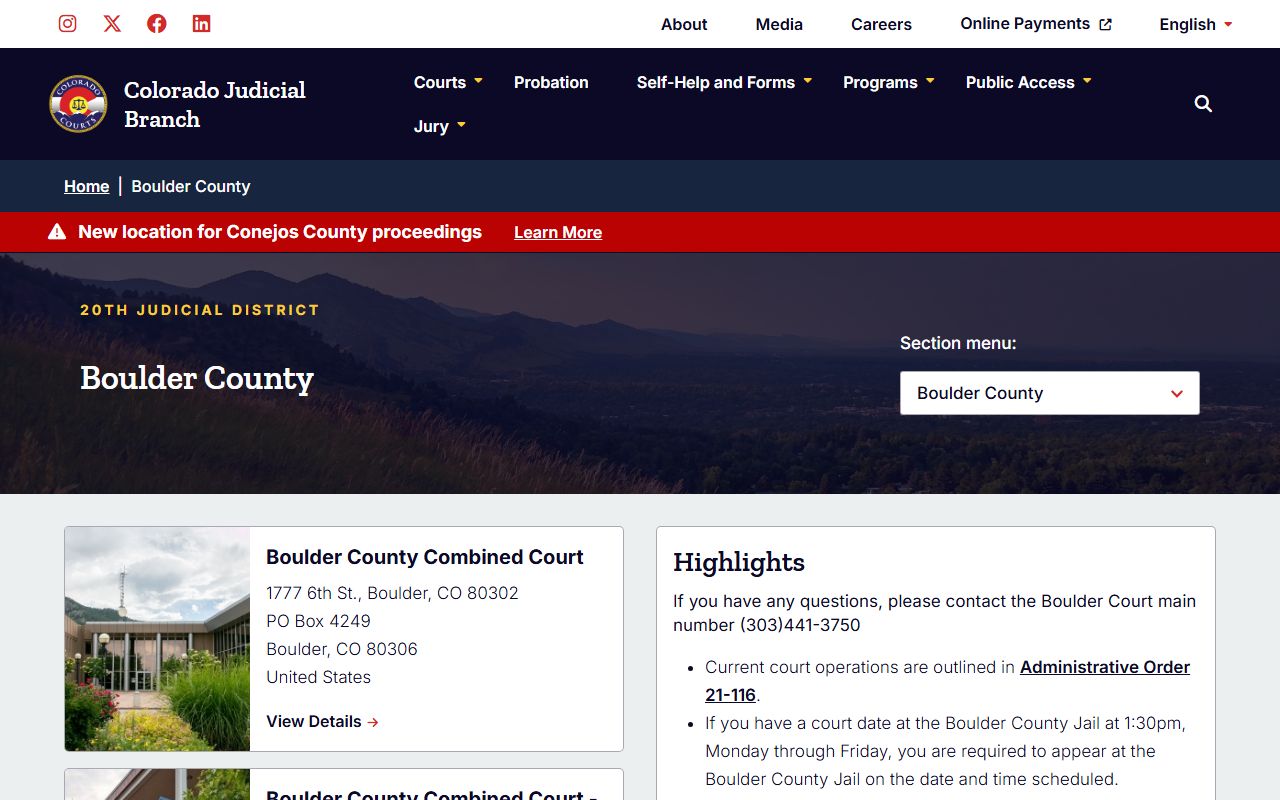
| Boulder Combined Court |
1777 6th Street Boulder, CO 80302 Phone: (303) 441-3750 |
|---|---|
| Longmont Combined Court |
1035 Kimbark Street Longmont, CO 80501 Phone: (303) 441-3750 |
| Hours | Monday through Friday, 8:00 AM to 4:30 PM |
| Website | coloradojudicial.gov |
How to Search Boulder County Criminal Court Records
You can search criminal court records in Boulder County in several ways. The state runs a free online system. It is called CoCourts. This database holds millions of records. You can search by name or case number. The site shows basic case details. It lists charges and hearing dates. You can see case status too. CoCourts covers both District and County Court cases in Boulder County.
CoCourts has County Court records from 1983. District Court records start in 1976. This is the official source for Boulder County. Visit cocourts.com to start your search. The system is free to use. No account is needed. Results show right away. You can print or save what you find. For older records, visit the court in person. Staff can search paper files. Some records may be stored off-site. Plan ahead for these requests.
To search criminal court records in Boulder County, you need:
- Full name of the defendant
- Date of birth if known
- Case number if you have it
- Approximate year of the case
In-person searches cost nothing. Staff will help you look up cases. Bring valid ID with you. Copy fees apply if you want paper copies. Certified copies cost extra. The clerk can explain all fees. Payment is due at time of service. Credit cards and cash are both accepted at Boulder County courts.
What Boulder County Criminal Court Records Contain
Criminal court records in Boulder County hold many documents. Each case starts with a complaint or information. This lists the charges. It names the defendant. It states the alleged crime. Police reports may be attached. These give facts about the arrest. They show what evidence police found. Witness statements may be included. All of this becomes part of the record.
Court filings add to the file over time. Motions ask the judge to do something. Responses answer those motions. Orders show what the judge decided. Plea agreements end many cases. These show what charge the defendant admits to. Sentencing orders state the punishment. All these papers are public records in Boulder County. You can read them. You can copy them.
A criminal court record in Boulder County typically shows:
- Defendant name and date of birth
- Case number and filing date
- Charges and statute numbers
- Court dates and hearing results
- Attorney names
- Bond amounts and conditions
- Final disposition and sentence
Some records are not open to the public. Sealed cases stay hidden. Expunged records are removed. Juvenile cases have special rules. Victim info may be redacted. These limits protect privacy. They follow Colorado law. Most adult criminal cases are open.
Criminal Case Process in Boulder County
Criminal cases in Boulder County follow state rules. The process starts with an arrest. Police may hold a suspect. They must file charges quickly. Misdemeanors go to County Court. Felonies go to District Court. Each level has its own procedures. Records are made at every step.
First appearance happens fast. The judge tells the charges. The defendant enters a plea. Most plead not guilty at first. The court sets bond. Conditions of release are set. These may include no contact orders. All of this goes in the file. You can see these records in Boulder County. The case moves to pretrial hearings. Motions are filed. Evidence is shared. Discovery goes both ways. Plea deals may form. Most cases settle before trial. If not, a jury hears the case. The verdict goes in the record.
Sentencing follows a guilty plea or verdict. The judge sets punishment. Options include jail, prison, probation, or fines. Restitution may be ordered. The sentence is public record. Appeals can follow. These also create records. All papers stay on file. Boulder County keeps them for years. Some records go to archives. The clerk can tell you where to find old cases. Under Colorado Revised Statutes Title 16, criminal procedure rules apply statewide. Boulder County courts follow these rules.
Note: Arrest records are separate from court records and are held by the arresting police agency.
Accessing Boulder County Criminal Court Records Online
Colorado offers online access to court records. The state portal is called CoCourts. It covers all 64 counties. Boulder County is fully included. The system updates daily. New filings appear fast. Closed cases stay in the database. This makes research easy.
You can search by person or business. Enter the last name first. Add a first name to narrow results. Use date of birth if you know it. Case numbers work too. The system shows a list of matches. Click any case to see details. You will see charges, dates, and status. Some documents are linked. Others must be viewed in person. CoCourts is free. No login is needed. Just visit the site and search. This is the best way to check Boulder County criminal court records from home.
For official copies, you may need to visit. Certified copies require a stamp. Only the clerk can certify. Electronic copies from CoCourts are for reference. They may not work for all legal needs. Check with your lawyer if you need certified copies of Boulder County criminal court records. The clerk charges per page for copies. Certification adds a flat fee. Call ahead to learn current rates.
Legal Help and Resources in Boulder County
Several groups help with criminal matters in Boulder County. Some offer free aid. Others charge reduced rates. These resources can explain the law. They help with forms. They may offer court guidance. Do not face criminal court alone. Get help if you need it.
Colorado Legal Services aids low-income residents. They help with some criminal matters. Call their hotline to learn more. The Boulder County Bar Association offers referrals. They connect you with local attorneys. Initial consults may be discounted. The State Public Defender handles cases for those who cannot pay. Apply at the courthouse. Eligibility depends on income. You can find forms at the Colorado Judicial Branch website.
The University of Colorado Law School runs clinics. Students help under lawyer supervision. These clinics may assist with record sealing. They help with other post-conviction issues. Boulder County also has victim services. These advocates help victims understand cases. They explain the process. They offer support during court. Contact the District Attorney's office for victim help. Their website lists services. Phone support is available too.
Key legal resources for Boulder County include:
- Colorado Judicial Branch - Forms and rules
- CoCourts - Free case lookup
- Colorado Bar Association - Lawyer referrals
- Boulder County District Attorney - Victim services
Related Records in Boulder County
Other offices hold records tied to criminal cases. The Sheriff's Office keeps arrest data. They run the jail. Booking records are there. The Boulder Police Department has reports. So does Longmont Police. Each agency keeps its own files. These are separate from court records. You must contact each agency directly. Some publish logs online. Others require formal requests.
The District Attorney files charges. They prosecute cases. Their office has case files too. These may have more detail than court files. However, DA files are not fully public. Active case info is limited. Closed cases may be open. Contact the Boulder County District Attorney for questions. They handle all felonies in the county. They also handle some misdemeanors. City attorneys handle others. This depends on which agency made the arrest.
Probation records are another type. These track supervised release. They are not in the court file. The probation department keeps them. Access is restricted. Only parties and lawyers can see most of this. If you need proof of completed probation, contact the court. The clerk can issue a certificate. This shows you finished all terms. It is useful for many purposes. Keep this document safe. It proves you met your obligations to the court in Boulder County.
Cities in Boulder County
Boulder County has several cities and towns. Criminal cases from all of them file in Boulder County courts. The location depends on where the crime occurred. Boulder city cases often go to the Boulder court. Longmont cases may go to either location. Smaller towns also file here. All use the same criminal court records system.
Other communities in Boulder County include Nederland, Superior, and Jamestown. All criminal court records from these areas are filed with the 20th Judicial District.
Nearby Counties
These counties border Boulder County. Criminal court records for cases in those counties are held by their respective courts. Each county is part of a different judicial district. Make sure you search the right county for your records.