
Access Colorado Criminal Court Records
Colorado criminal court records are public documents. You can search them online or in person. The state has 64 counties. Each county has a court system that handles criminal cases. District courts hear felonies. County courts handle misdemeanors. You can find dockets, case files, and dispositions through official channels. The Colorado Judicial Branch provides access to these records under state law.
Colorado Criminal Court Records Quick Facts
Where to Find Colorado Criminal Court Records
You have several ways to find criminal court records in Colorado. The Colorado Judicial Branch runs a free docket search tool. This tool lets you look up court schedules and basic case facts. You can search by name, case number, or location. The site shows hearing dates, case types, and party names. Visit the Colorado Judicial Branch dockets page to start your search.
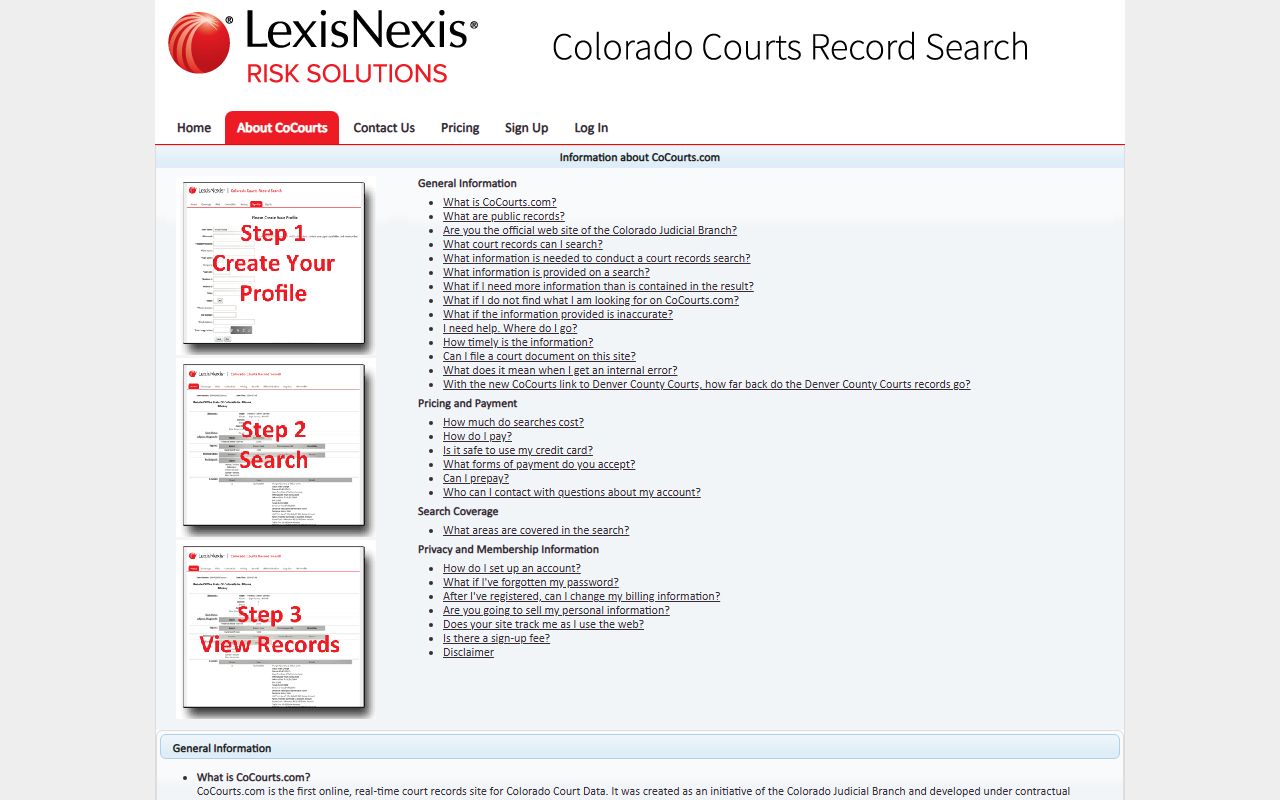
CoCourts.com is a paid service. It gives you more detailed case information. The site shows the full register of actions for each case. You can see charges, dispositions, and scheduled events. CoCourts charges $5 for a county search. A statewide search costs $10. The site covers most Colorado counties. Some records go back to the 1970s. You can visit CoCourts.com to search criminal court records online.
The Colorado Bureau of Investigation offers criminal history checks. These show arrests and convictions statewide. The Internet Criminal History Check system costs $6 per search. You need the exact name and date of birth. Results come back right away. Visit cbirecordscheck.com to run a background check. This is different from court records. It shows arrest history rather than full case files.
Note: Court records and criminal history records are not the same thing in Colorado. Court records come from the courts. Criminal history comes from law enforcement.
How to Search Criminal Court Records in Colorado
Online searches are the fastest way to find criminal court records. You can search from home at any time. The Colorado Judicial Branch docket search is free. CoCourts.com charges fees but gives more details. Both tools cover cases from county and district courts across Colorado.
To search the free docket system, you need at least one filter besides the date. You can search by party name, case number, attorney, or location. The system shows hearing schedules and basic case facts. It does not show full case documents. You must contact the court directly for copies of actual filings. The Colorado docket search works best when you know which county heard the case.
CoCourts.com lets you search by last name and first name. You can search up to four first names with one last name in a single search. Results show the register of actions for each case. This includes charges, plea entries, and dispositions. The site updates in real time. Changes in the state system appear within an hour. Visit CoCourts.com for detailed criminal case lookups in Colorado.
To search effectively, you should have the following information ready:
- Full legal name of the defendant
- Approximate date of the case filing
- County where the case was heard
- Case number if you have it
You can also search in person at any Colorado courthouse. Each county has a clerk of court office. Staff can help you find records and make copies. Most clerks charge a fee for copies. Certified copies cost more than plain ones. Call ahead to check hours and fees before you visit.
Types of Colorado Criminal Court Records
Colorado criminal court records include several types of documents. The register of actions is a list of everything that happened in a case. It shows filings, hearings, and court orders. This is what you see on CoCourts.com. It gives you a timeline of the case from start to finish.
Case files hold the actual documents. These include the charging document, motions, and court orders. The final disposition shows how the case ended. This might be a conviction, dismissal, or acquittal. You can get copies of these documents from the clerk of court. The Colorado public records access guide explains how to request copies.
Criminal court records in Colorado typically contain the following:
- Defendant name and case number
- Charges filed by the prosecutor
- Court dates and hearing schedules
- Plea entries and plea agreements
- Trial dates and verdicts
- Sentencing orders and probation terms
- Case disposition and final outcome
District court records cover felonies and serious misdemeanors. County court records cover lesser misdemeanors and traffic cases. Some cases start in county court and move to district court. This happens when felony charges are filed. The clerk in each court can tell you where to find the records you need.
Colorado Laws for Criminal Court Records Access
Colorado law controls who can see criminal court records. The Colorado Criminal Justice Records Act sets the rules. This law says records of official actions must be open to the public. Official actions include arrests, charges, and dispositions. Other records may be open at the custodian's discretion.
Under C.R.S. § 24-72-304, custodians can make rules for inspecting records. They can deny access in certain cases. Denial may happen if release would harm an ongoing investigation. It may also happen if release would endanger victims or witnesses. The law balances public access with privacy and safety concerns.
Juvenile records have different rules. They are governed by the Children's Code under C.R.S. Title 19. Most juvenile records are not public. You cannot see them through the usual search tools. Expungement is possible for some juvenile records. This process removes them from public access. Adult sealing is different from juvenile expungement. Sealing hides the record but does not destroy it. Courts and law enforcement can still see sealed records.
Sealing of adult criminal records is allowed under C.R.S. § 24-72-706 for convictions. Non-conviction records may be sealed under C.R.S. § 24-72-702 to 705. Waiting periods apply. Petty offenses require one year. Misdemeanors require three years. Some felonies require five years. Not all crimes can be sealed. Class 1, 2, and 3 felonies are not eligible. Sexual offenses and crimes of violence also cannot be sealed.
Criminal Court Record Fees in Colorado
Fees vary based on what you need and where you get it. Online searches on CoCourts.com cost $5 per county search. A statewide search costs $10. You pay even if the search finds no results. The CBI Internet Criminal History Check costs $6. Copy fees at courthouses vary by county.
Most courts charge for copies of documents. The fee is often $0.25 per page for electronic copies. Paper copies may cost $0.75 per page. Certified copies cost extra. Some counties charge a flat fee for certified documents. Contact the specific court to learn their current fees. The Colorado records request form can be used for official requests.
Here are common fees for criminal court records in Colorado:
- CoCourts county search: $5.00
- CoCourts statewide search: $10.00
- CBI Internet Criminal History Check: $6.00
- CBI CHRI staff processed: $13.00
- Court copy fees: $0.25-$0.75 per page
Fee waivers are sometimes available. You must show that you cannot pay. The court decides if you qualify. Fill out a motion to proceed without payment. Include proof of your income. The judge will review your request.
Note: CoCourts and CBI fees are set by the vendors. Court copy fees are set by each county.
Colorado Bureau of Investigation Background Checks
The CBI runs the central repository for criminal history in Colorado. Their records come from fingerprint cards and arrest reports. These are not the same as court records. Court records show what happened in a case. CBI records show arrests and dispositions reported to the state.
The Internet Criminal History Check system is the fastest option. It costs $6 per search. You need the exact name and date of birth. Results show arrests and convictions from Colorado only. The search excludes juvenile arrests and sealed records. Traffic arrests under age 16 are also excluded. Visit CBI ICHC page for more details.
ICHC results cannot be notarized. If you need a notarized background check, use the CHRI process. This costs $13 and is processed by CBI staff. Fill out the Criminal History Record Information Request Form. Mail it with payment to the Biometric Identification and Records Unit. The address is 690 Kipling St., Ste. 4000, Lakewood, CO 80215.
Colorado Court System Structure
Colorado has a two-level trial court system. County courts handle less serious cases. District courts handle more serious matters. Both courts keep criminal records. You need to know which court heard a case to find the right records.
County courts have limited jurisdiction. They handle misdemeanors and traffic infractions. They also hear felony complaints at first. These may be sent to district court later. County courts handle civil cases under $25,000. They also issue protection orders. Records from county courts go back to different dates in each county. Some start in the 1970s. Others start in the 1990s.
District courts are the courts of general jurisdiction. They hear felonies and serious misdemeanors. They also handle civil cases of any amount. Domestic relations and juvenile cases go to district court. So do probate and mental health cases. District court records often go back further than county court records. Many districts have records from the 1970s or earlier.
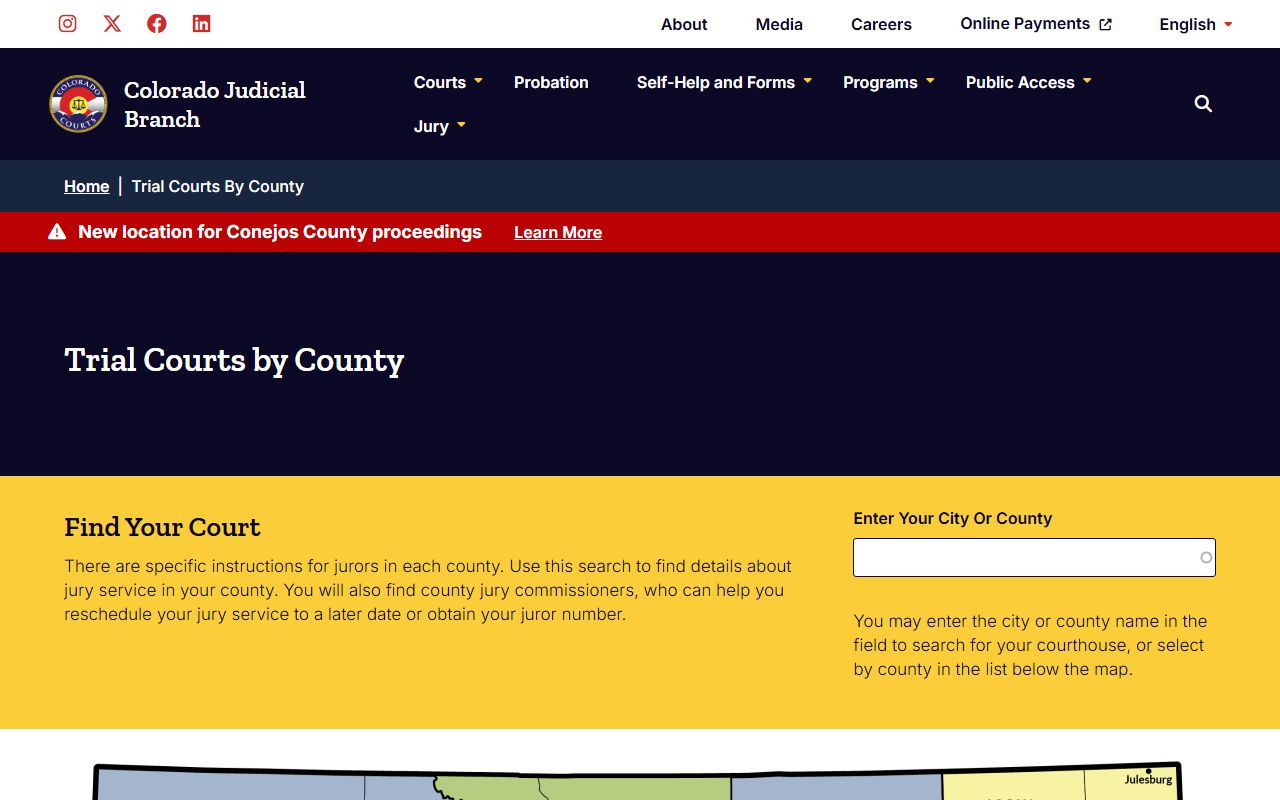
Denver County Court is different from all others. It is administered separately from the state court system. This is noted in Colorado public records access policies. Denver has its own website and request process. Contact coradatarequests@denvercountycourt.org for Denver County Court records. Denver District Court is part of the state system.
Historical Criminal Court Records in Colorado
The Colorado State Archives holds old court records. These include Supreme Court cases and cases from county and district courts. The archives keep full case files. These contain all documents filed in a case. Historical records can date back to the 1800s.
To search historical records, you need a case number. For Supreme Court and Court of Appeals cases, this is required. For county and district court cases, you need the county name and case number. If you do not have a case number, call the county where the case was filed. They can help you find it. Visit the Colorado State Archives legal records page to learn more.
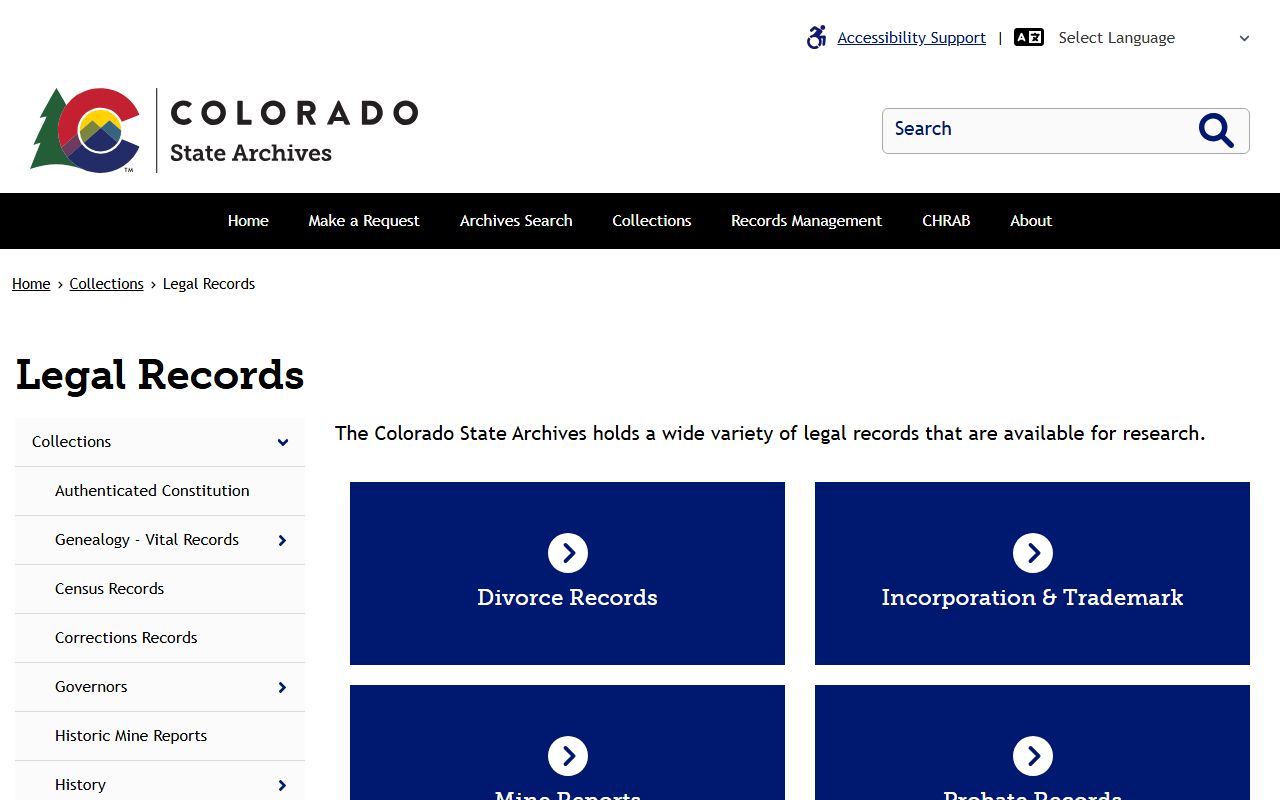
Some historic records are available online. Others must be viewed in person at the archives. The archives are in Denver. Contact them ahead of time to check what they have. Some records may be stored offsite and take time to retrieve.
Are Colorado Criminal Court Records Public
Yes, most criminal court records are public in Colorado. The Criminal Justice Records Act says records of official actions must be open. This includes arrests, charges, and dispositions. Anyone can inspect these records. You do not need to give a reason for your request.
Some records are not public. Juvenile records are restricted. Sealed records cannot be viewed. Some victim information is protected. Records may be redacted to protect sensitive details. Social security numbers and financial account numbers are removed. Home addresses may also be hidden.
Custodians can deny access under C.R.S. § 24-72-305. Denial is allowed if release would harm an investigation. It is also allowed if release would endanger someone. The custodian must have a valid reason for denial. You can appeal a denial if you believe it is wrong.
Note: Third-party vendors like CoCourts do not provide official court records. They provide information from the court database. For certified copies, you must contact the court directly.
Browse Colorado Criminal Court Records by County
Each of the 64 Colorado counties maintains criminal court records. Select a county below to find local contact information and resources for searching criminal court records in that area.
Criminal Court Records in Major Colorado Cities
Colorado residents in major cities file criminal cases at their county courts. Select a city below to learn about criminal court records in that area.